
Study Purpose
Why this study matters
Biomedical core facilities play a vital role in enabling high-quality research, shared infrastructure, and scientific collaboration. This study explores current operating models, identifies challenges and opportunities, and builds a clearer understanding of how these facilities support innovation.
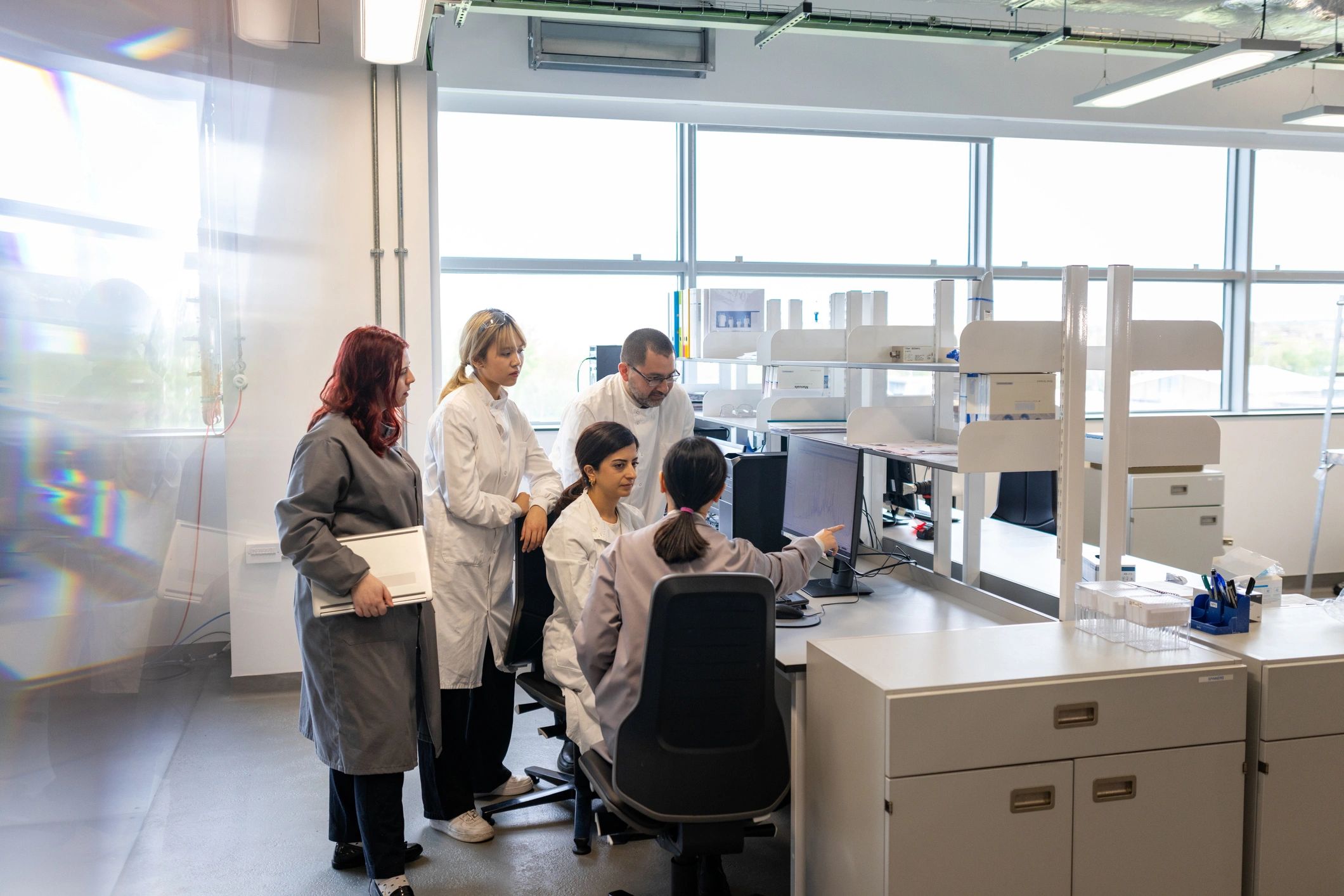
Definitions
What is a biomedical core facility?
What is a core facility?
The Canadian Foundation for Innovation (CFI) has created definitions to distinguish its research facilities. In this study, core facilities are defined as shared centres that provide access to multiple researchers in a local region. For this study, core facilities are accessible to researchers (typically on a cost recovery basis) within universities, academic health science centers, industry, government or research centres. Equipment which is within a individual academic laboratory is not considered a core facility in this study.
How do we define ‘Biomedical’?
Scientific platforms that contain either specialized infrastructure and / or expertise relevant to performing research on the health and diseases of humans and animals.
Equipment suited to a BCF includes, but is not limited to:
- Flow cytometry and sorting;
- Cell Culturing services;
- Spatial-omics platforms, including genomic sequencers, mass spectrometers, etc.;
- Advanced microscopes (light, confocal, super resolution, and electron microscopes);
- High-fidelity imaging platforms for human or animal models (echocardiography, micro-PET-SPECT-CT or MRI scanners);
- Histology services;
- Biochemistry/Structural biology (NMR, Mass spectrometry, X-ray crystallography, metabolomics, lipodomics, protein-protein structures or interactions, spectrophotometers, chromotography, Cryo-EMs).
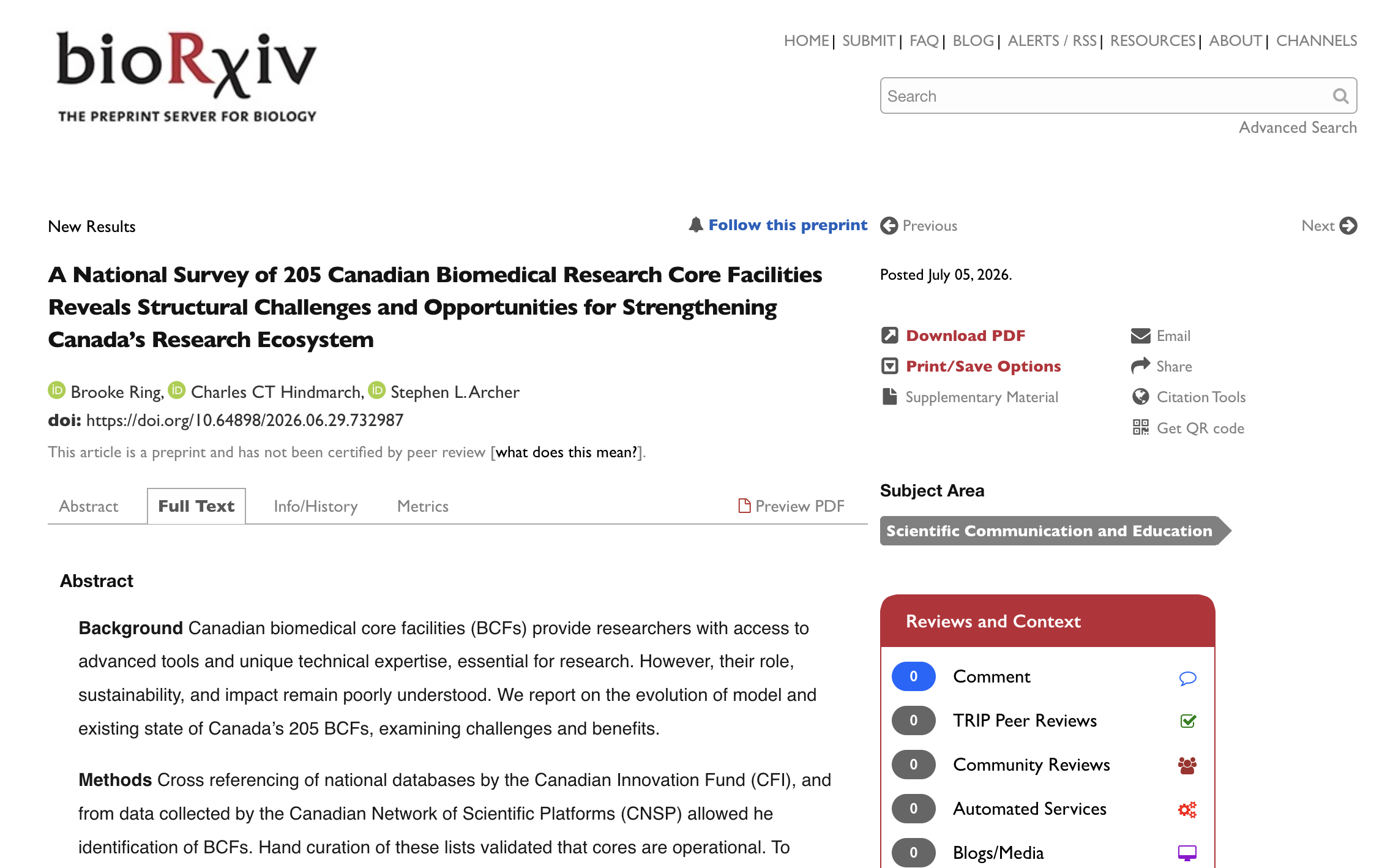
Canada has over 200+ Biomedical Core Facilities
Canadian biomedical core facilities (BCFs) provide researchers with access to advanced tools and unique technical expertise, essential for research. However, their role, sustainability, and impact remain poorly understood. We report on the evolution of model and existing state of Canada’s 205 BCFs, examining challenges and benefits.
Survey Audiences
Choose the right survey
To capture a complete picture of biomedical core facilities, the study includes separate surveys for four audience groups. Title mights not reflect the role. Please select the option that best reflects the majority of your role:
Core Facility Staff
For staff or trainees employed by a biomedical core facility who support day-to-day operations, service delivery, and technical expertise within biomedical core facilities.
Core Facility Users
For academic faculty researchers or staff, industry or government employees who access biomedical core facility services, equipment, or expertise.
Non-Users of Core Facilities
For academic faculty researchers or staff, industry or government employees who do not currently use (in the past 2 years or more) biomedical core facilities and can share perspectives on barriers, awareness, or alternative approaches.
Leadership who oversee Core Facilities
For leaders, directors, and decision-makers responsible for oversight, strategy, funding, or administration of biomedical core facilities.
Still not sure which survey to select?
Take this 30 second quiz!
Trust and Ethics
Built on responsible research
This website supports an academic study designed to inform understanding of biomedical core facilities and their impact on research and innovation.
Visitors can review dedicated information about research ethics, study context, and participation details before completing a survey.


Researcher
Meet Brooke Ring
Brooke Ring leads this research initiative and is focused on understanding how biomedical core facilities operate, evolve, and contribute to the broader research ecosystem. Learn more about the researcher, study background, and project context on the dedicated researcher page.